

Surfing in the Algarve in Winter: Best Beaches & Tips
Winter brings a very different energy to the Algarve's western coastline. While much of the Eastern Algarve settles into a quieter rhythm around the Ria Formosa, the Atlantic coast around Sagres, Carrapateira and Aljezur becomes particularly interesting for surfers looking for more consistent and powerful waves.
Inside this story
Winter brings a very different energy to the Algarve's western coastline. While much of the Eastern Algarve settles into a quieter rhythm around the Ria Formosa, the Atlantic coast around Sagres, Carrapateira and Aljezur becomes particularly interesting for surfers looking for more consistent and powerful waves.
Portugal is a year-round surfing destination, but the colder months are especially significant on the Atlantic coast. Winter generally brings larger swells than summer, while locations facing different directions around Sagres allow surfers to look for conditions that suit the day's swell and wind. Portugal's official tourism website highlights the Costa Vicentina as one of the country's major surfing areas, with Arrifana, Carrapateira and Praia do Amado among its recognised surf beaches.
That does not mean winter surfing is only for experts. Beginners can still surf during the colder months, but choosing the right beach becomes much more important. Rather than arriving at a famous surf spot and assuming the conditions will be suitable, beginners and less experienced surfers are usually better joining a local surf school that can select the safest location for the swell, tide and wind on that particular day.
Why Surf the Algarve in Winter?
The main attraction is the Atlantic swell. Local surf operators describe winter as a period of larger, more powerful waves, while established surf forecasting guides identify autumn through winter as the prime season for several western Algarve breaks. Praia do Castelejo, for example, is particularly reliable from autumn into winter, while Tonel's preferred season runs roughly from October into spring.
Winter also brings a different atmosphere to the surfing towns and beaches. Although well-known breaks can still become busy when the forecast is good, the coastline generally feels very different from the height of summer. The beaches are quieter, accommodation demand is different, and surfers can spend their days following conditions rather than competing with the busiest holiday-season crowds.
The trade-off is that winter requires more preparation. The water and air are cooler, storms can bring difficult conditions, and swell size can change considerably from one day to the next. A winter surf holiday therefore works best when you remain flexible rather than deciding several days in advance exactly which beach you will surf.
Where Is the Best Winter Surfing in the Algarve?
Most of the Algarve's well-known winter surfing is concentrated in the western Algarve, particularly between Aljezur, Carrapateira, Vila do Bispo and Sagres. This stretch of coastline sits directly against the Atlantic and has a very different landscape and ocean exposure from the sheltered lagoons and barrier islands found around Tavira and Fuseta.
Sagres is especially useful because the coastline changes direction around Portugal's southwestern corner. That means beaches relatively close to one another can respond differently to swell and wind. For travelling surfers, having several options within the same wider area can be valuable when winter conditions become stronger or more variable.
For Somewhere Special guests staying in the Eastern Algarve, these beaches are better treated as a dedicated surfing day trip rather than a local morning activity. If surfing is the main purpose of your entire holiday, staying in the western Algarve will generally be more convenient. If you want to combine one or two surf days with birdwatching, cycling, walking and quieter time around the Ria Formosa, however, the western surf coast can become one part of a broader winter Algarve holiday.
1. Praia do Amado, Carrapateira
Best for: Surf schools, beginners on suitable days and surfers looking for a well-established surf beach
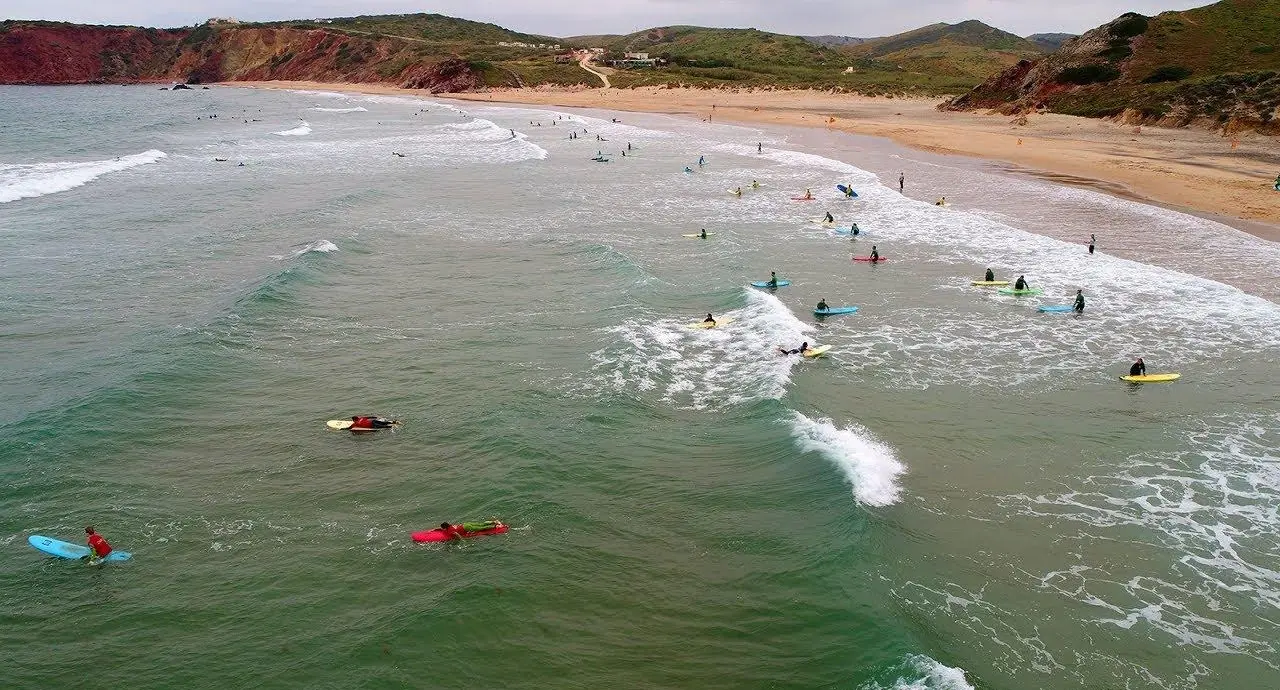
Praia do Amado is one of the Algarve's best-known surfing beaches. Located near Carrapateira on the Costa Vicentina, its wide stretch of sand and strong Atlantic exposure have made it a regular location for surfing activity and competitions. Portugal's tourism authority specifically identifies Praia do Amado as a major surfing beach and notes that beginners can find surf schools here to help them get started.
Its reputation should not be interpreted as meaning the beach is beginner-friendly in every condition. Winter swell can become powerful, and the appropriate part of the beach can change depending on wind, tide and wave size. A beginner visiting in January should therefore approach Praia do Amado very differently from an experienced surfer reading a detailed forecast.
For first-time surfers, booking a lesson gives you more than instruction. A good local school will assess the day's conditions, provide appropriate equipment and decide whether Praia do Amado or another nearby beach is the better option. Some Algarve surf schools even move their winter lessons away from Amado towards beaches around Sagres according to the conditions.
2. Praia da Arrifana, Aljezur
Best for: Dramatic scenery and surfers looking to explore the Aljezur coast
Arrifana is one of the most recognisable beaches on the western Algarve. Sheltered below tall cliffs near Aljezur, the beach combines Atlantic surf with one of the most dramatic coastal settings in the region. It is among the Costa Vicentina beaches specifically highlighted by Portugal's tourism authority for surfing and bodyboarding.
The beach's relatively protected shape can make it different from fully exposed stretches of the western coast, but conditions still vary considerably. Winter waves should always be assessed on the day rather than assuming that a sheltered-looking bay automatically means gentle surf.
Arrifana also works well for travellers who want more from the day than simply getting into the water. The cliffs, surrounding landscape and nearby town of Aljezur make it possible to combine surfing with a wider exploration of the Costa Vicentina, particularly when travelling from another part of the Algarve.
3. Praia do Castelejo, Vila do Bispo
Best for: Consistent Atlantic exposure and surfers with some experience
South of Carrapateira and closer to Vila do Bispo, Praia do Castelejo offers another classic western Algarve surf environment. Surfline describes it as a consistent beach break that can work for different abilities when conditions are appropriate, but it also warns that larger surf requires advanced experience because rip currents and rocky areas can become hazards. Its stronger season generally extends from autumn through winter and into spring.
This distinction is particularly important in winter. A beach that works well for intermediate surfers one morning can become significantly more demanding when a new Atlantic swell arrives. Checking surf height alone is therefore not enough; tide, wind, currents and the experience of the surfer all matter.
Nearby Cordoama gives experienced surfers another option, reinforcing one of the main advantages of exploring this part of the Algarve. Rather than choosing one beach for the entire holiday, surfers can assess several breaks according to the day's conditions.
4. Praia do Tonel, Sagres
Best for: Experienced surfers and those staying around Sagres
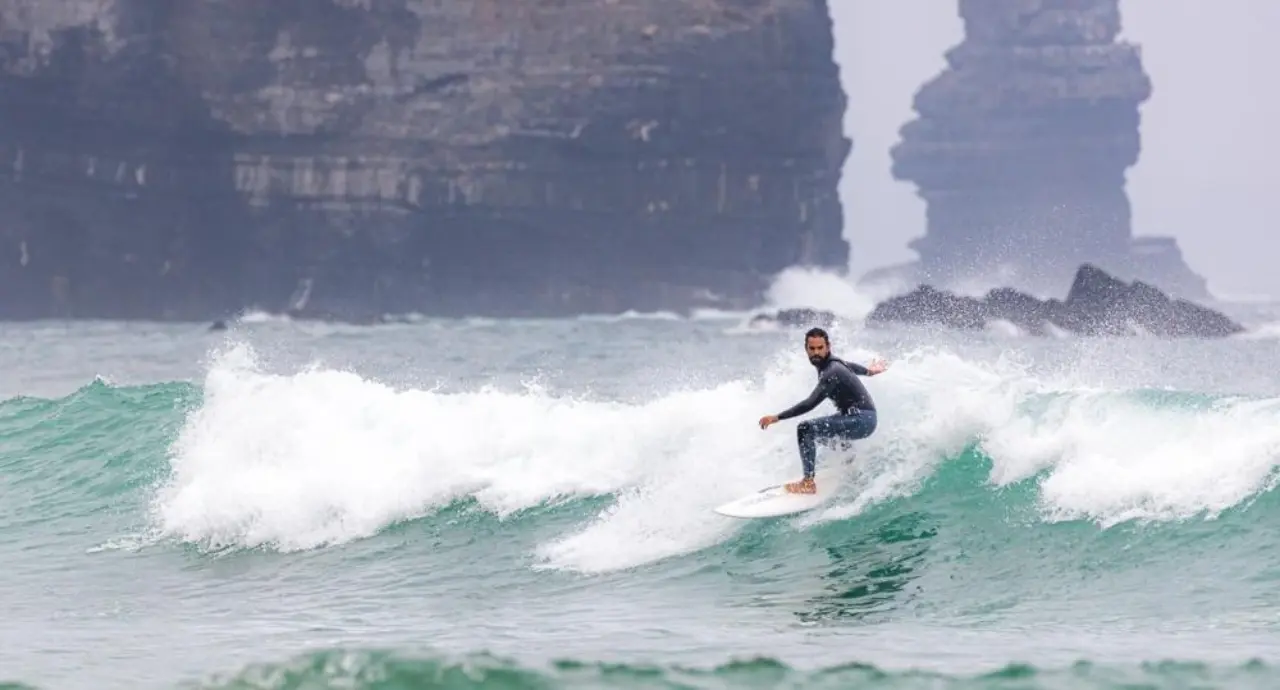
Tonel sits beside Sagres and has direct exposure to the Atlantic, making it one of the town's best-known surf beaches. Its proximity to Sagres also makes it convenient for surfers who want to check the conditions without travelling far from town.
Surfline describes Tonel as a consistent beach break and identifies October to April as its strongest season. The same guide notes that the beach can require advanced ability on larger days, with rip currents, shifting peaks and rock patches among the hazards surfers should understand.
For experienced surfers, Tonel's appeal is easy to understand. For beginners, however, seeing dozens of surfers in the water does not necessarily mean the conditions are appropriate for learning. Winter is precisely the season when relying on local knowledge becomes more important.
Sagres itself makes a useful base for a dedicated surf day because other beaches with different orientations are relatively close. If Tonel is too exposed, a local school or experienced surfer may choose somewhere more sheltered depending on the swell and wind.
5. Praia do Beliche, Sagres
Best for: A more sheltered Sagres option when conditions line up
Beliche lies between Sagres and Cape St Vincent and is surrounded by high cliffs. Portugal's tourism authority notes that those cliffs provide shelter from strong winds and describes Beliche as a popular surfing and bodyboarding beach.
Its south-facing orientation makes it behave differently from beaches directly exposed to the west. Surfline identifies winter, particularly December through February, as Beliche's strongest season, although the size and quality of the waves still depend heavily on swell direction and tide.
The beach can therefore become an important option when the western coast is receiving larger winter swell. That does not make it automatically safe or easy, particularly around the main peak. The access is also by steps beneath high cliffs, so visitors should pay attention to local safety information and avoid areas affected by unstable cliff faces.
Which Surf Beach Should You Choose?
There is no single Algarve beach that is best every winter day. Surfing here is highly dependent on conditions, and part of the experience is understanding that the best location can change from one day to the next.
| If you're looking for... | Consider |
| A first surf lesson | A surf school around Sagres or Praia do Amado |
| Famous Costa Vicentina scenery | Arrifana |
| Consistent western exposure | Castelejo |
| A classic Sagres surf spot | Tonel |
| A more sheltered Sagres option | Beliche |
| Multiple beach choices nearby | Sagres / Vila do Bispo |
For beginners, the most useful choice is not necessarily a specific beach but a reputable local instructor. For experienced surfers, checking several nearby breaks is usually more useful than committing to a famous name before seeing the forecast.
Is Winter Surfing Suitable for Beginners?
Yes, but with an important qualification: beginners need conditions suited to beginners.
Portugal's official tourism information describes the Algarve as having surfing opportunities for different abilities and specifically points new surfers towards schools at Praia do Amado. Local schools around Sagres also continue offering winter lessons, moving between beaches according to conditions rather than teaching at the same spot every day.
That flexibility is exactly what a beginner needs. Winter swells may be larger than during summer, so having an instructor who understands which beach is protected, what the tide is doing and where currents are forming can completely change the experience.
If you have never surfed before, avoid choosing a beach simply because you have seen it recommended online. Book the lesson first and let the instructor decide where you should surf that day.
What About Intermediate and Experienced Surfers?
Winter is where the western Algarve becomes particularly interesting for surfers with more experience. Larger Atlantic swells create more opportunities, but they also demand better judgement about wave size, currents, wind and tides.
Intermediate surfers should be realistic about ability. A spot that feels manageable in smaller conditions can become a very different wave during a strong winter swell. More experienced surfers will usually benefit from having transport and remaining flexible enough to check several west- and south-facing beaches.
This is one of the advantages of the Sagres area. Because the coastline turns around the southwestern tip of Portugal, surfers can sometimes move between more exposed Atlantic locations and beaches with different orientations without travelling across the entire region.
When Is the Best Time to Surf?
For the western Algarve, autumn through winter and into spring is generally the stronger surf period. Several established breaks have seasons centred around roughly October to March or April, while local schools describe December to February as a time of bigger swell compared with summer.
The best time of day is less predictable. Wind and tide can matter as much as the hour, and a beach that looks good first thing in the morning may deteriorate later—or the opposite may happen. Before setting out, check a reliable surf forecast for swell height, swell direction, period, wind and tide rather than looking only at the general weather forecast.
If you are taking lessons, your surf school will usually handle these decisions. If you are surfing independently, local knowledge remains valuable, particularly after storms or when a larger swell arrives.
What Wetsuit Do You Need in Winter?
Winter surfing in the Algarve means wearing a proper wetsuit. Local surf schools around Sagres typically recommend winter equipment suitable for cooler Atlantic water, with one current season guide suggesting a 4/3 mm wetsuit for January and February.
Exactly what you need depends on water temperature, weather, session length and personal tolerance to cold. Some surfers may also prefer boots or additional thermal protection during colder or windier periods.
If you are taking a lesson, equipment is normally available through the surf school; one established Algarve operator includes wetsuits and beginner boards in its winter lessons. This makes trying surfing during a holiday much easier because you do not need to travel with your own board and winter wetsuit.
Check More Than the Weather Forecast
A sunny day is not automatically a good surf day, and a cloudy one is not automatically bad. Surf conditions are created by a combination of offshore swell, local wind, tide, seabed and the orientation of each beach.
Before surfing independently, check the forecast for the specific break rather than relying on a general "Sagres weather" prediction. Pay attention to any local warnings, and if the beach looks significantly more powerful than conditions you normally surf, choosing somewhere else is the sensible decision.
Our separate guide to Algarve winter weather from November to February explains the broader seasonal conditions, but surfers should always use a dedicated surf forecast when deciding whether and where to enter the water.
Staying in the Eastern Algarve and Surfing the West Coast
Somewhere Special's holiday homes are based around the Eastern Algarve and Ria Formosa, far from the busiest western resort areas. That means we would not describe Sagres or the Costa Vicentina as a local surf break from your holiday home.
Instead, think of surfing as a western Algarve adventure within a longer stay.
You might spend several days cycling, walking or birdwatching around the Ria Formosa and choose one good-weather day to explore the Atlantic coast. For travellers staying longer, this can be an enjoyable contrast: one day brings calm lagoon landscapes and quiet Eastern Algarve villages, while another takes you west towards cliffs, surf beaches and the raw Atlantic.
If you intend to surf every morning of your holiday, a western Algarve base will make more sense. If surfing is one experience among several you want from a winter trip, staying in the quieter Eastern Algarve lets you combine it with a very different side of the region.
A Different Side of the Algarve in Winter
Surfing reveals just how varied the Algarve really is. Around Tavira and Fuseta, winter can mean calm mornings beside the Ria Formosa, quiet beaches and gentle cycling routes. Travel west and the landscape changes into high cliffs, exposed coastline and Atlantic waves.
For experienced surfers, winter brings some of the year's most interesting conditions. For beginners, it provides an opportunity to experience the sport with a local school and discover a part of the Algarve that feels very different from its familiar summer image.
The important thing is not to chase the biggest wave or the most famous beach. Check the conditions, choose somewhere appropriate for your ability and allow enough flexibility for the Atlantic to decide where you surf.
That is part of what makes winter surfing here an adventure.
Make Surfing Part of a Longer Algarve Winter Stay
A winter holiday does not have to revolve around one activity. Somewhere Special's homes in the Eastern Algarve and around the Ria Formosa provide a peaceful base for exploring nature, coastal villages, beaches and cycling routes, while the western Algarve offers a very different adventure when you want to spend a day chasing Atlantic waves.
For travellers who enjoy mixing active days with a slower place to return to, the contrast can be part of the appeal. Spend one day exploring the surf coast and the next walking beside the lagoon, having lunch in Fuseta or simply enjoying the quieter rhythm of the Eastern Algarve.
Explore Somewhere Special's Eastern Algarve holiday homes and build a winter holiday around the Algarve experiences that interest you most.